
Introduction
Commercial Diving plays a critical role in maintaining the infrastructure that supports global trade and marine operations. Ports, harbors, and offshore facilities depend on underwater inspections, repairs, and construction to remain safe and operational. According to the United Nations Conference on Trade and Development (UNCTAD), more than 80% of world trade by volume moves by sea. This massive dependence on maritime infrastructure makes regular underwater maintenance essential.
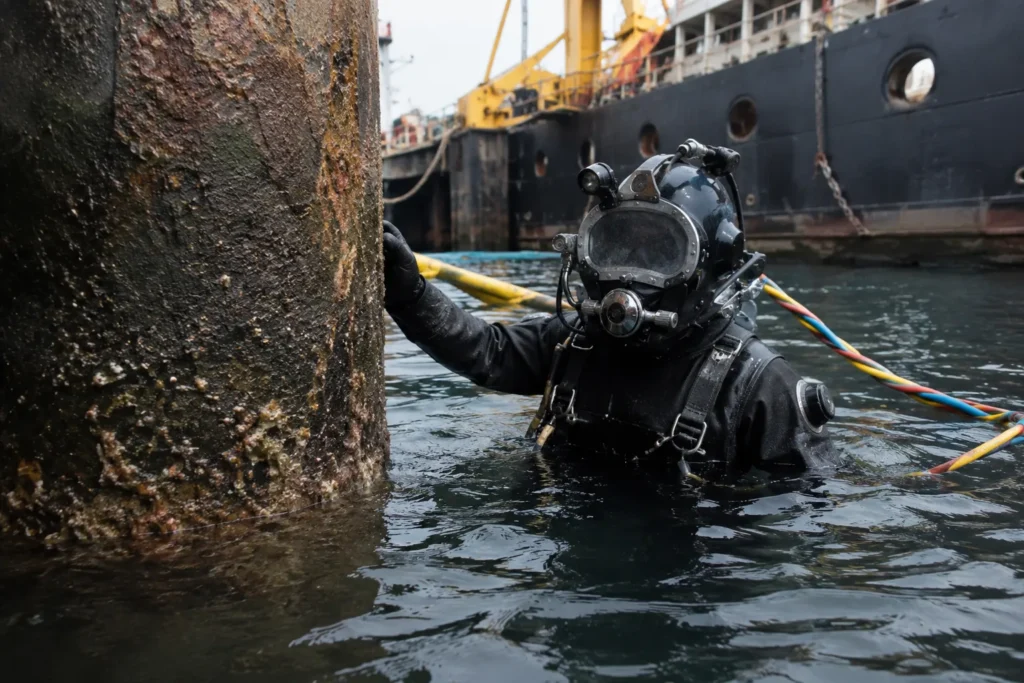
Commercial diving teams perform specialized tasks below the waterline where conventional equipment cannot reach. Their work includes inspecting quay walls, repairing submerged structures, conducting underwater welding, and supporting offshore energy projects. These services help prevent costly downtime, extend asset lifespan, and ensure regulatory compliance.
From busy container terminals to offshore oil platforms, underwater assets face constant exposure to corrosion, marine growth, and structural wear. Industry experts report that proactive underwater inspections can reduce major repair costs by up to 40%. We often see facility operators prioritize routine diving services because early detection significantly lowers long-term maintenance expenses. As maritime industries continue expanding, Commercial Diving remains a vital solution for preserving critical infrastructure and maintaining operational efficiency.
The Importance of Commercial Diving in Marine Infrastructure
Supporting Safe and Efficient Operations
Commercial Diving ensures underwater structures remain stable, safe, and fully functional. Ports and harbors rely on divers to inspect pilings, seawalls, berths, and navigation systems. Offshore facilities require routine underwater assessments to verify structural integrity and operational readiness.
Marine environments create constant challenges for submerged assets. Saltwater accelerates corrosion, while marine organisms attach to surfaces and increase deterioration rates. Divers identify these issues before they become serious structural problems. Early intervention reduces operational disruptions and improves long-term performance.
Key benefits of commercial diving services include:
- Structural inspections and assessments.
- Underwater welding and repairs.
- Marine growth removal.
- Emergency damage response.
- Environmental monitoring.
- Asset lifespan extension.
- Regulatory compliance support.
Many port authorities schedule underwater inspections every 12 months to maintain safety standards. This proactive approach helps prevent unexpected failures and costly emergency repairs.
Core Commercial Diving Services for Ports and Harbors
Inspection, Maintenance, and Repair Solutions
Commercial Diving teams provide a wide range of services tailored to marine infrastructure needs. Underwater inspections represent one of the most common requirements. Divers use cameras, sonar systems, and specialized equipment to evaluate submerged structures.
Maintenance activities often include cleaning, corrosion treatment, and debris removal. Marine growth can reduce operational efficiency and accelerate structural degradation. Regular cleaning helps maintain optimal performance and safety.
The following table highlights common commercial diving services and their applications:
| Service | Primary Purpose | Typical Benefit |
|---|---|---|
| Underwater Inspection | Structural assessment | Early problem detection |
| Underwater Welding | Structural repair | Reduced replacement costs |
| Marine Growth Removal | Surface cleaning | Improved efficiency |
| Salvage Operations | Recovery of equipment | Minimized losses |
| NDT Testing | Structural analysis | Accurate condition reporting |
| Pipeline Inspection | Infrastructure monitoring | Regulatory compliance |
Industry data shows that underwater inspections can identify structural defects up to 18 months before visible surface indicators appear. This advantage allows facility managers to plan repairs strategically rather than reactively. Explore our solutions for Commercial Diving.
Commercial Diving for Offshore Facilities
Supporting Energy and Industrial Operations
Commercial Diving plays a vital role in offshore oil, gas, and renewable energy sectors. Offshore platforms, subsea pipelines, and wind farm foundations require continuous monitoring and maintenance to remain operational.
Divers inspect underwater pipelines for leaks, corrosion, and mechanical damage. They also support the installation and maintenance of subsea equipment. Offshore wind projects increasingly depend on diving services for foundation inspections and cable assessments.
The global offshore wind sector added more than 10.8 gigawatts of new capacity during 2024. This growth has increased demand for specialized underwater maintenance services. Experienced diving teams help operators maintain reliability while meeting strict safety requirements.
Expert divers often work alongside remotely operated vehicles (ROVs). This combination improves efficiency and provides detailed underwater data. While technology assists operations, skilled divers remain essential for complex repair and construction activities that require human judgment and precision.
Safety Standards and Advanced Technologies
Modern Practices Driving Better Results
Commercial Diving operates under strict safety regulations and industry standards. Organizations such as the Association of Diving Contractors International (ADCI) establish guidelines that promote safe working environments. Professional diving teams undergo extensive training and certification before entering the field.
Modern technology has transformed underwater operations. High-definition cameras, ultrasonic testing equipment, and digital reporting systems improve inspection accuracy. Real-time video feeds allow engineers to monitor underwater activities from the surface.
Several advancements are improving diving operations:
- Real-time underwater imaging systems.
- Advanced non-destructive testing equipment.
- Digital inspection reporting.
- Surface-supplied air systems.
- Integrated diver communication networks.
- Hybrid diver and ROV operations.
Our experience shows that combining advanced technology with skilled divers delivers the most reliable results. Facilities gain more accurate assessments while reducing operational risks and maintenance costs.
Conclusion
Commercial Diving remains essential for the safe operation of ports, harbors, and offshore facilities. These specialized services support inspections, repairs, maintenance, and underwater construction activities that protect critical marine infrastructure. Regular underwater assessments help identify issues early, reduce repair expenses, and improve asset longevity. As maritime trade and offshore energy projects continue expanding, demand for professional diving services will grow. Organizations that invest in routine underwater maintenance benefit from improved safety, reduced downtime, and stronger long-term performance. Commercial Diving provides the expertise needed to keep marine infrastructure operating efficiently in some of the world’s most challenging environments.
